How AI Is Being Used in Social Media Investigations
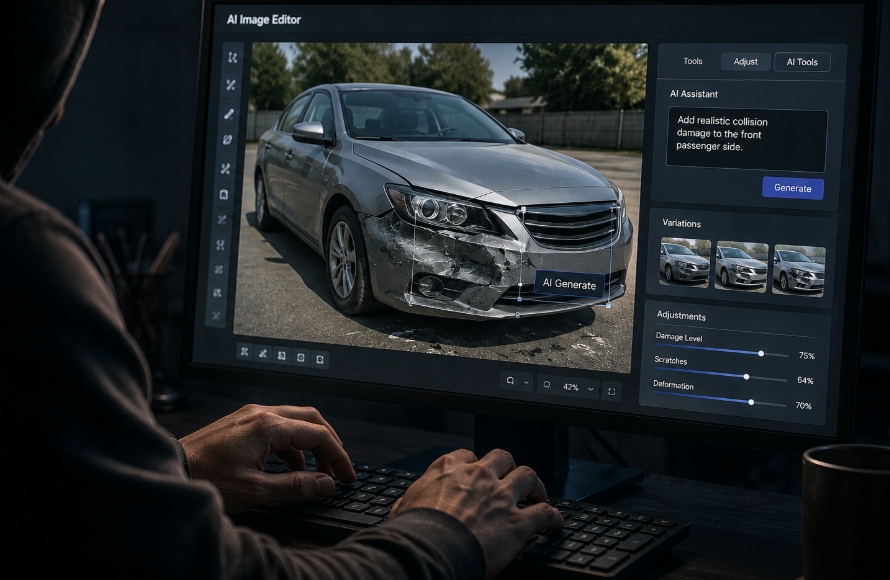
AI is changing social media investigations by helping investigators sort through large amounts of public content and identify information that may be relevant to a claim. This blog explores how AI can make investigations more efficient while showing why human review and verification remain essential.
By Caroline Caranante | Sep 18, 2026 | 3 min. read

What you will find below:
- How AI Is Changing Social Media Investigations
- Ways AI Can Help Identify Relevant Posts, Images, and Locations
- Why AI-Generated Findings Still Need Human Verification
- What AI Means for Faster, More Defensible Claims Investigations
A single claimant can leave a digital footprint across several platforms: Facebook, Instagram, Strava, TikTok, and more.
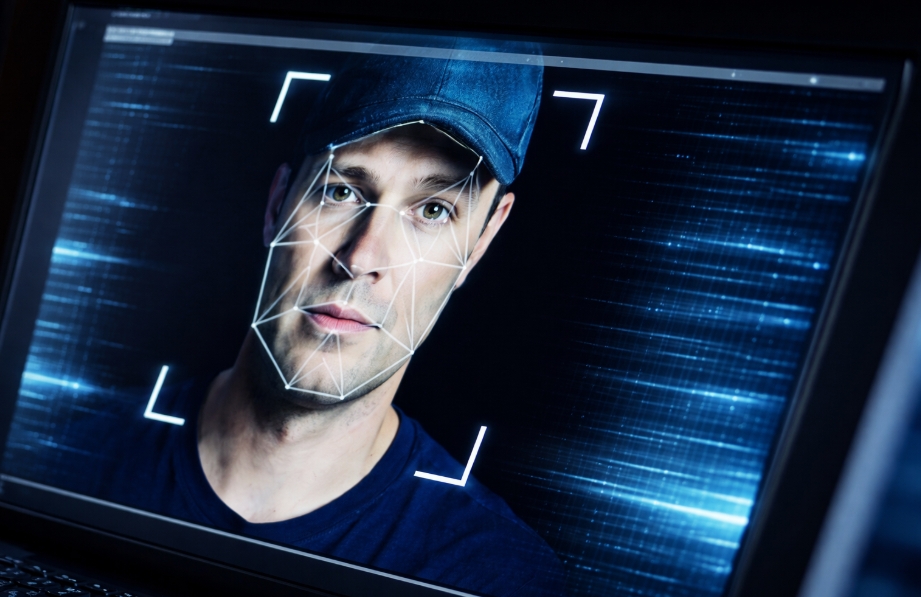
Reviewing all of that manually has always been time-consuming, and much of what turns up may have little relevance to the claim. What has changed is the technology available to investigators. Generative and agentic AI systems can now take in and sort through large amounts of public content much faster than a person working through it manually.
How AI Is Changing Social Media Investigations
Open-source investigators are already using that speed at a much larger scale than most claims investigations would require. That provides a useful look at what these tools can handle.
Example
In June 2026, the BBC Eye investigations team described using an AI system called Haystack to gather and analyze roughly 10,000 social media posts from more than ten Russian nationalist groups. The team said this type of work would have taken weeks or months to complete manually, showing how AI can help investigators work through large volumes of social media content much more efficiently.
Ways AI Can Help Identify Relevant Posts, Images, and Locations
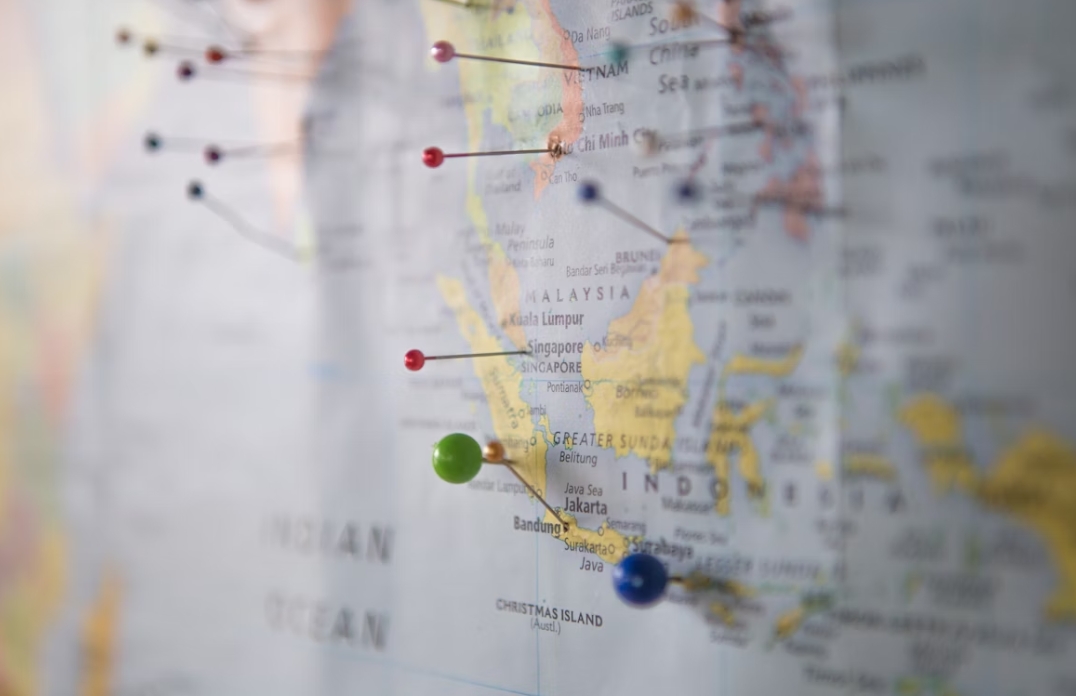
One capability shows just how far this technology has come: identifying a location from a photo that has no location data attached to it.
Example
In a case study published by Graylark Technologies, developer of the AI geolocation tool GeoSpy, a wanted fugitive facing drug and firearms charges posted a photo of a car to his Instagram Story. The photo had no GPS metadata, and there was little public information available about where it was taken. According to the company, the image was the only lead detectives had. They ran it through GeoSpy, which identified a precise street address in seconds. The fugitive was in custody about 20 minutes later.
AI geolocation tools analyze visual details an investigator might notice manually, such as streetlights, language on a storefront sign, the shape of a roofline, or vegetation that may suggest a particular season. The model can then compare those details against reference sets containing tens of millions of geolocated images and return a candidate location in seconds.
These tools are not infallible. For example, one OSINT geolocation test found that AI correctly interpreted foreign-language signage in an image but misread a clearly mountainous background as flat terrain (“A Geolocation Walkthrough”). The result may be useful, but it still needs to be verified.
The same applies to other ways AI can be used in social media investigations. It can quickly search through posts for specific words, identify patterns in activity, and flag photos or videos that may be worth a closer look. But it can also miss something an investigator would notice or flag content that has nothing to do with the claim.
AI can help narrow the search, but an investigator still needs to determine whether the information actually matters to the claim.
Why AI-Generated Findings Still Need Human Verification
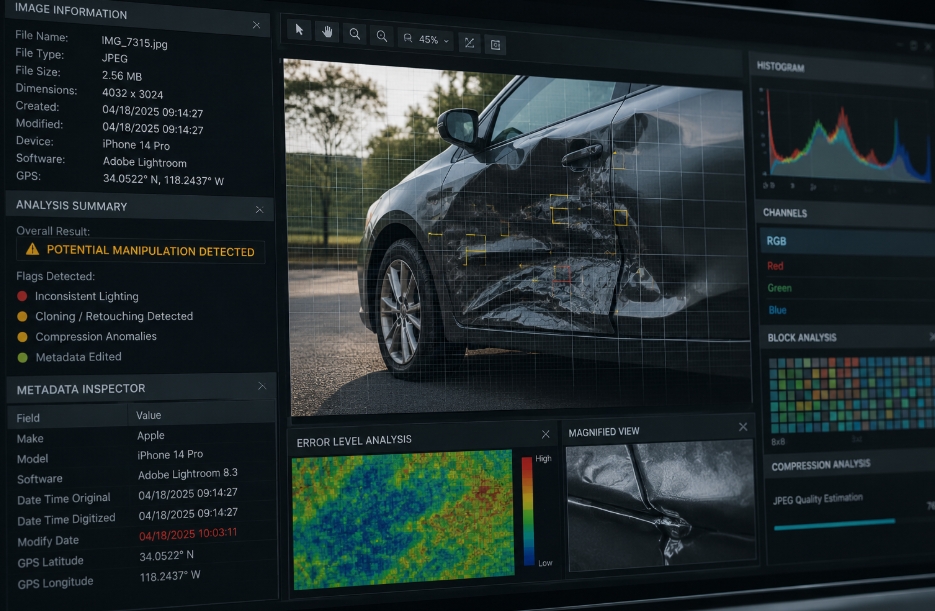
The results can vary depending on the tool and the type of content being analyzed. A 2025 Purdue University study tested several AI-based content-verification tools using real-world manipulated social media content. The researchers found that performance varied widely, with nearly every tool performing worse on video than on still images. Some tools that performed well when analyzing images also incorrectly identified authentic videos as fake.
That makes verification especially important in claims investigations. An AI-generated result can point an investigator toward something worth reviewing, but it should not be treated as a final answer.
There is also the issue of bias. The Purdue researchers tested tools designed to reduce differences in how AI performs depending on the demographics of the people or subjects being analyzed. The results reflect a known limitation of image-recognition technology.
NIST’s 2024 report on synthetic content transparency points to a similar issue. The agency identified areas where additional research is still needed, indicating that the technology used to detect and authenticate digital content is continuing to develop.
What AI Means for Faster, More Defensible Claims Investigations
AI can make social media investigations faster by sorting through large amounts of content and helping investigators identify information that may be worth a closer look. But a faster search does not replace the investigation itself. AI can miss important details, misinterpret what it finds, or flag something that has little relevance to the claim.
That makes human review just as important. Investigators should document how an AI-generated lead was found, keep the original source content, and verify important findings before they become part of a claim decision.
For claims investigations, the value of AI is not in making the decision. It is in helping investigators get the right information faster. The training, case context, human verification, and documented reasoning that follow are what turn that information into a finding that can support a defensible claim decision.
Want social media investigations that deliver actionable, defensible findings? Connect with our team today.
Sources:
- “A Geolocation Walkthrough.” OSINT Combine, 3 Oct. 2024, updated 6 June 2026, osintcombine.com.
- “Catching a Fugitive in 20 Minutes: How AI Changes the Game for Law Enforcement.” GeoSpy, Graylark Technologies, 1 Aug. 2025, geospy.ai.
- Giles, Christopher, et al. “How BBC Eye Built a Multi-Agent AI System to Sift Through Ten Thousand Russian Social Media Posts.” Reuters Institute for the Study of Journalism, June 2026, reutersinstitute.politics.ox.ac.uk.
- Lin, Guangyu, et al. “Fit for Purpose? Deepfake Detection in the Real World.” arXiv, 30 Oct. 2025, arxiv.org.
- National Institute of Standards and Technology. Reducing Risks Posed by Synthetic Content: An Overview of Technical Approaches to Digital Content Transparency. NIST AI 100-4, U.S. Department of Commerce, Nov. 2024, doi.org.
- “The Powerful AI Tool That Cops (or Stalkers) Can Use to Geolocate Photos in Seconds.” 404 Media, 20 Jan. 2025, 404media.co.